



Hay fever or cold?
Especially in spring, when most people enjoy the first rays of sunshine and delight in the awakening nature, painful times begin for many. The hay fever season starts. But how can one distinguish the symptoms from a cold?
Symptoms of a pollen allergy like hay fever
(Pollen) allergy sufferers suddenly react to harmless pollen with itchy & watery eyes, runny nose or stuffy nose, real sneezing attacks, and often with a general feeling of illness. As a result, restful sleep is hardly possible. A general weakness and lack of drive set in, and performance decreases.
Distinction from dust mite allergy
If the symptoms occur throughout the year and especially after getting up despite closed windows, a dust mite allergy may be the case.
Distinction from cold
If headaches or a scratchy throat occur beforehand, it will be a cold. A cold lasts up to a week, while hay fever depends on the flowering period of the allergenic plant pollen. However, both can also occur simultaneously.
What helps against hay fever?
Avoidance – avoid pollen contact with pollen flight calendar. Through the pollen flight calendar, you can find out which pollen are currently in the air: DWD Pollen Flight Hazard Index
Unfortunately, those affected can hardly escape the allergens. If left untreated, the condition only improves temporarily when the pollen flight that triggers the allergy decreases or all contact is avoided. In the next season, the illness returns – usually even more severely and with asthma or cross-allergies in tow.
Medications against hay fever
One distinguishes between locally acting and systemically acting medications that work against the symptoms of hay fever.
Topical medications, such as eye drops, nasal drops, and nasal sprays (e.g., antihistamines, corticosteroids, vasoconstrictors, or preparations with cromoglicic acid) work locally.
Systemically acting medications are administered in the form of tablets, drops, or syrups.
Desensitization
In contrast to the symptom-oriented, local treatment, desensitization aims at healing the cause of the disease. The allergens are administered regularly in increasing doses to promote the immune system's tolerance. This long-term treatment can bring lasting success – although not for every patient.
Asthma and cross-allergies
Additional conditions such as asthma or cross-allergies to foods can occur over time. The molecular similarity between birch pollen and pollen from legumes such as peanuts or peas is a common trigger for this. Even with weakened desensitization, cross-allergies can occur.
Personal experience report: Probiotics instead of desensitization
For our employee René Runge, consuming pea soup in the university cafeteria led to a severe cross-allergy, so the initiated desensitization had to be discontinued.
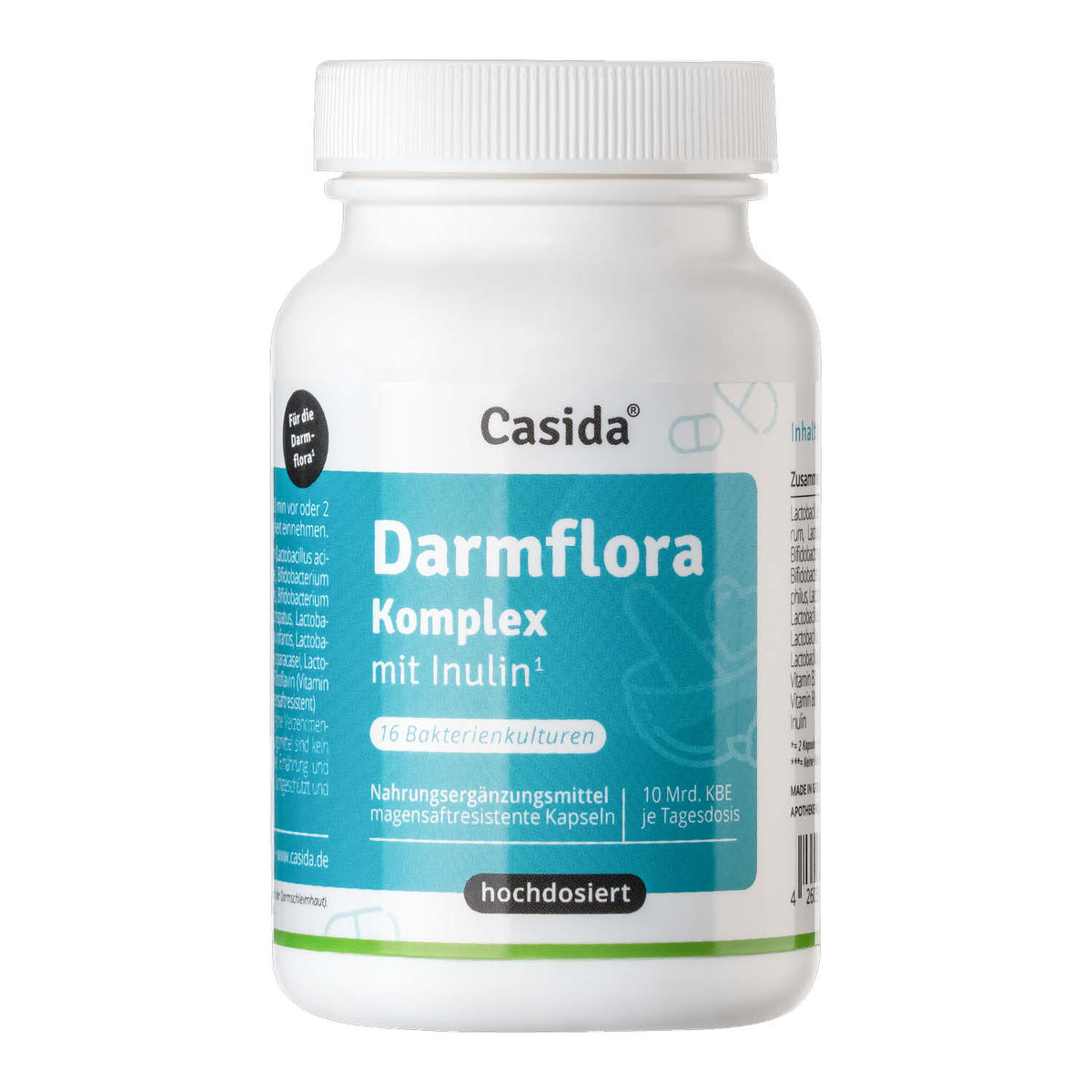
“After the treatment against birch, grass, and rye pollen as part of a desensitization, I had eaten pea soup. This combination led to immediate vomiting and a permanent intolerance to peas, lentils, and other legumes. I realized that the desensitization must have been the reason, and I stopped the treatment. During the hay fever season, I then took tablets again, with fatigue and strain increasing over the years, and I also developed asthma. I had positive experiences with taking gut flora complex capsules – a dietary supplement with selected bacterial strains for the gut.
After four months, I felt a significant relief during the hay fever season, and the asthma was gone. However, there are still slight symptoms when consuming legumes. This, however, depends on the preparation.”
Relationship between immune system, hay fever, and gut flora
If the gut has enough protective bacteria, the mucous membrane can regenerate, inflammation subsides, and the immune system calms down. The body's defense thus learns to distinguish between harmful and harmless substances.
“Very often, there is a direct connection between allergic reactions and the bacterial colonization in the gut. An unfavorable composition of the gut flora can lead to damage and overreactions of the mucous membranes, both in the gut and in the nasal-pharyngeal area. If the gut is restored with suitable probiotic substances, the overstimulated immune system can calm down. Allergic symptoms, such as inflammation of the nasal mucosa and eyes, subside.”
These probiotic products are recommended for allergies. In particular, lactic acid bacteria protect and stabilize the mucous membranes. In combination with resistant starch (inulin), these bacterial strains settle better – they serve as food for the good gut bacteria. Preparations with a proven mixture of lacto- and bifidobacteria with inulin, such as the Casida Gut Flora Complex with Inulin, are recommended.
To strengthen the local mucous membranes in the throat-pharyngeal area, the strains Lactobacillus salivarius and Lactobacillus reuteri can be used in the form of lozenges. Additionally, they promote the care of the oral cavity to prevent cavities, canker sores, and gum inflammation.
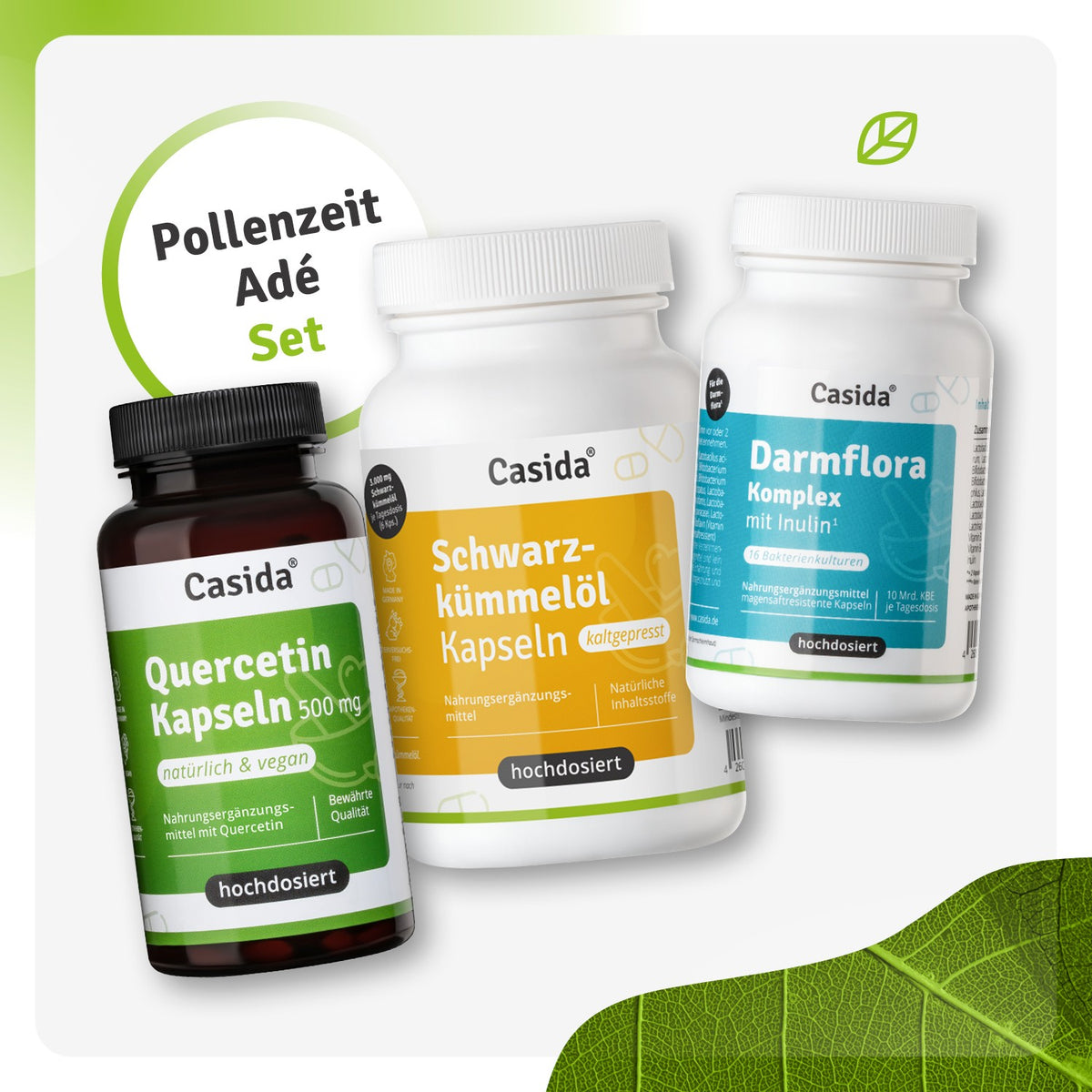
A complete set for gentle, natural support for allergies is offered by the Hay Fever Goodbye Set with quercetin-zinc drops, which contribute to the normal function of the immune system, as well as the Probiotics Complex capsules with inulin.
As the experience report shows, not every treatment for allergies leads to success. What are your experiences? We look forward to personal experiences in the comments. Best regards from the Casida team!
Sources & further links:
- German Lung Foundation e.V. “Can probiotic foods alleviate hay fever?” (2008) – Article available online
- ECARF “Less hay fever through probiotics” (2020) – Article available online
- Jakubczyk, Dominika and Górska, Sabina: “Impact of Probiotic Bacteria on Respiratory Allergy Disorders” in Front. Microbiol. (2021) – Article available online
- Michail, Sonia: “The role of Probiotics in allergic diseases” in Allergy, Asthma & Clinical Immunology (2009) – Article available online
- Dissertation by Hennen, Marcel (2009) – Article available online
- Fuller, R. (1989): Probiotics in man and animals – Article available online